Quick answer
Boomerangme can be a better fit when a local business wants a branded wallet-card program without making one particular register or ecommerce platform the center of the decision. That is a more useful comparison than asking which software has the longest feature list.
A retailer built around Shopify, a restaurant running its whole counter through Square, and a salon with a separate booking system do not have the same requirements. Start with the customer and staff journey, then choose the platform that handles that journey well.
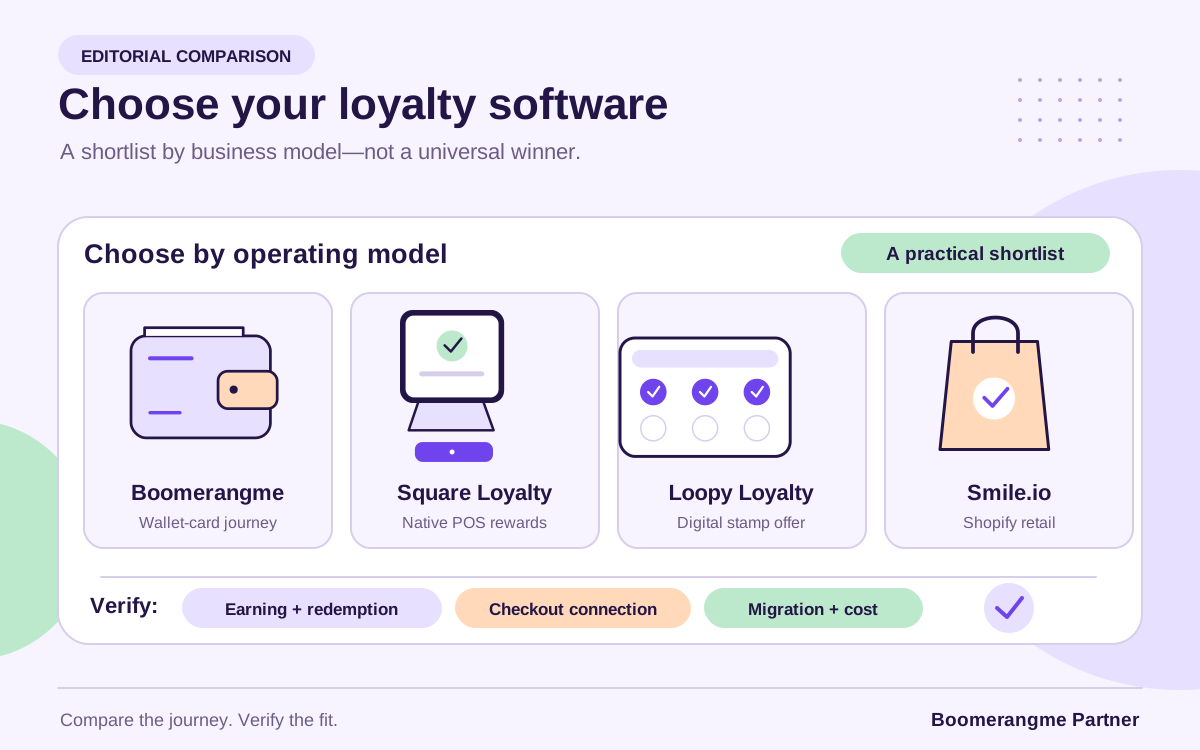
Three loyalty approaches serve different operating models
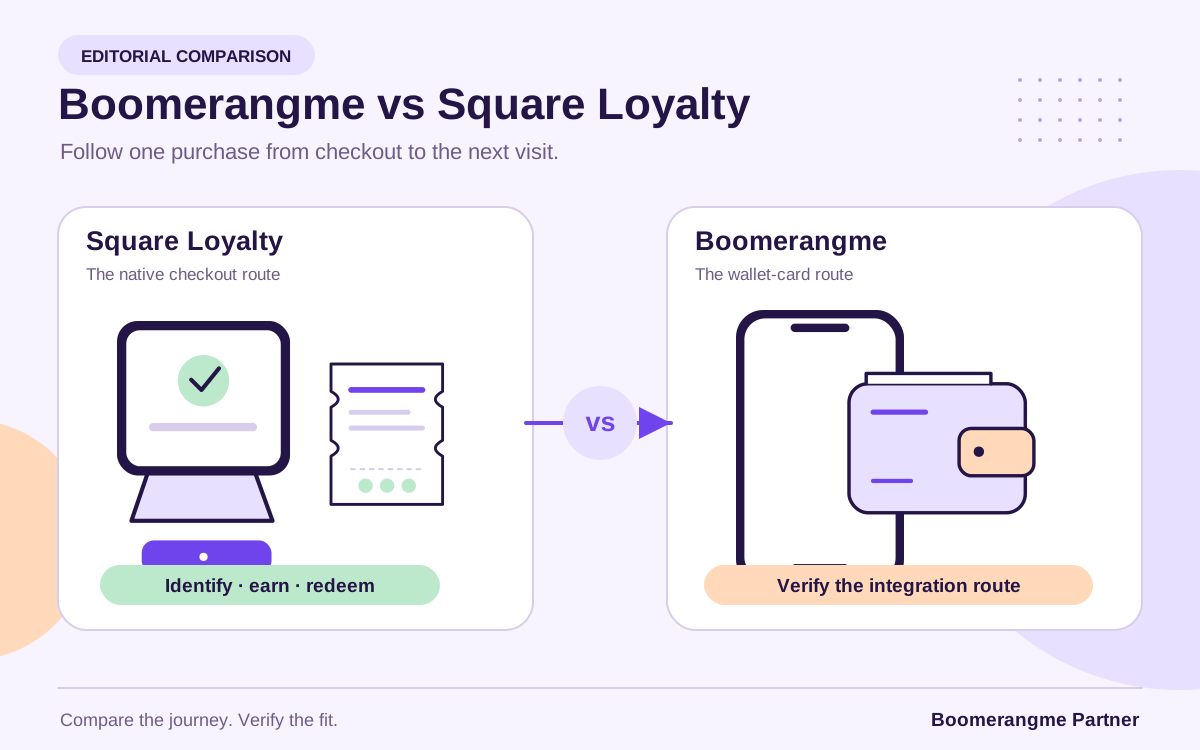
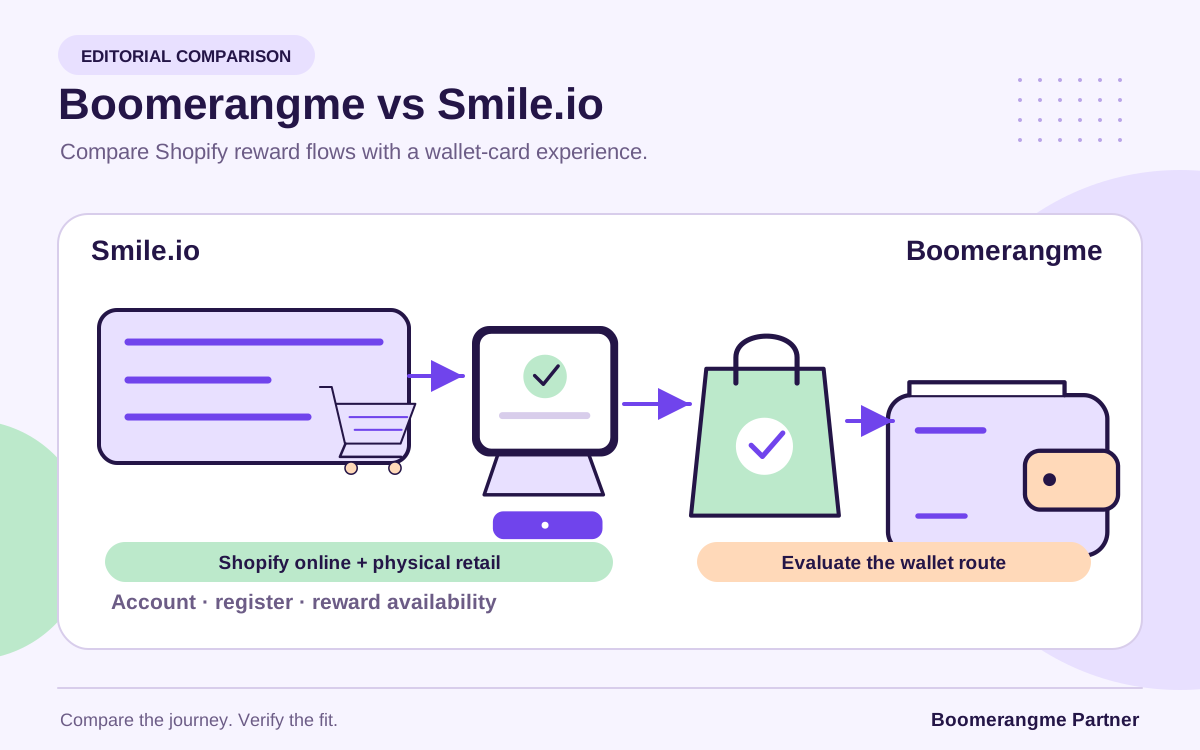
Square Loyalty offers a native rewards flow within Square’s business tools. Smile.io emphasizes Shopify loyalty and also describes Shopify POS support. These systems have legitimate advantages for businesses already committed to their ecosystems.
Boomerangme supplies a wallet-card approach with a documented stand-alone Scanner App. That gives a local owner another route to investigate when an existing commerce system is not the right foundation for the loyalty project.
| Your operating priority | The approach worth testing first |
|---|---|
| One native Square checkout process | Square’s own loyalty workflow |
| Rewards embedded in a Shopify buying journey | A Shopify-focused loyalty platform |
| Your own wallet-card program outside one ecosystem | Boomerangme’s stand-alone or supported integration route |
| A simple stamp scheme with few additional requirements | A focused digital stamp-card tool |
This is a shortlist guide, not a claim that features never overlap. Demonstrate the exact workflow on the current versions of the products.
Where Boomerangme has a persuasive advantage
The first advantage is flexibility around the launch point. You can investigate a loyalty program while keeping another working business system in place. That matters when changing the register, payment process, or appointment software would be a disproportionate response to a modest rewards project.
The second is a customer-facing identity built around your card. If your reward is intended to follow a customer across qualifying visits, make the card easy to recognize and the progress easy to explain.
The third is room to investigate broader loyalty tasks as your program matures. Add a new mechanism only when it serves a defined customer purpose. A broader platform is valuable when it reduces a real operating gap, not simply because more switches exist in the dashboard.
Independence can add work as well as flexibility
A stand-alone rewards step still takes staff time. The operator may need to process the loyalty action separately from the sale. During a rush, that extra step matters.
Use a hypothetical service business to examine the tradeoff. Its booking system is suitable, and only a few rewards are processed each hour. An independent loyalty step could be manageable. A very high-volume checkout processing continuous orders may place greater value on a native transaction flow.
This is why Boomerangme’s advantage should be demonstrated. Record the full process from customer identification to benefit application and sale completion. Include a busy period instead of testing only when the counter is empty.
Compare total operating cost rather than headline price
A software comparison should account for the plan, locations, staff access, required integrations, communication usage, and your team’s administration. Check current quotes instead of repeating older pricing from third-party articles.
Separate a vendor’s subscription from reward fulfillment. A free item or service benefit has a cost even when the software makes redemption easy. Compare the same reward rules across platforms so the commercial exercise stays meaningful.
Ask what happens when the system is unavailable. Can staff recognize an existing commitment, document an exception, and reconcile it afterward? Do not assume an offline mode or automatic refund handling exists unless the provider demonstrates it.
Run a decision test with five real situations
Before choosing, bring these scenarios to each shortlisted provider:
- A new customer saves the card and makes a qualifying purchase.
- An existing member earns progress during a busy checkout.
- A customer redeems an eligible benefit.
- A returned purchase requires a loyalty adjustment.
- A staff member makes a mistake and an authorized person corrects it.
Write down what the customer sees, what staff do, and what is recorded. Then add any location or online/in-store requirement specific to your business. A side-by-side demonstration can reveal more than a generic sales presentation.
For deeper product-specific differences, use our Square comparison and Smile.io comparison. This guide focuses on choosing the underlying operating model.
Frequently asked questions
Is Boomerangme better for every business?
The strongest case is a local business whose wallet-card and operating requirements fit its approach. Native ecosystem tools can be preferable when they already handle the full sales journey your team needs.
Does Smile.io work only for online stores?
Its current website also describes Shopify POS support. Compare its actual online and in-store workflow rather than treating ecommerce-focused tools as incapable of physical retail.
Can I keep my existing POS while evaluating Boomerangme?
The Scanner App offers a documented stand-alone route. Confirm the separate staff steps and any integration you later intend to add.
Choose the platform around your next customer visit
If you want a wallet-card loyalty experience that can begin outside a single commerce ecosystem, Boomerangme has a strong practical case. Validate that advantage with your team’s busiest, most realistic transactions.
Explore Boomerangme to examine its current workflow and decide whether it is the better fit for your business.
Sources & further reading
- Boomerangme Scanner AppPrimary stand-alone processing capability.
- Square LoyaltyPrimary current native loyalty workflow.
- Smile.io platformPrimary Shopify positioning and Shopify POS support.
- Boomerangme pricingVerify current plan limits and costs before choosing.
Sources reviewed October 5, 2026. Numerical examples are illustrative unless a cited source states otherwise.